Summary: While traditional focus groups have long been a foundational tool in market research, they often struggle to capture the fast, subconscious decisions that drive everyday shopping. Because FMCG purchases are largely driven by habit rather than deep logical thought, asking shoppers to rationalise their choices in an artificial group setting can lead to skewed data. Today, the most effective market research methods, such as real-world shopper observation, digital consumer panels, and implicit testing, offer a better route, allowing brands to measure what people actually do in the moment.
For decades, the traditional focus group has been a cornerstone of the insights industry. The logic makes sense: if you want to understand why people buy what they buy, or how they might react to a new advertising campaign, pulling a group of consumers into a room for an in-depth conversation seems like the perfect solution.
However, as our understanding of consumer psychology and behavioural science evolves, many FMCG brand and shopper insights teams are re-evaluating their toolkits. While focus groups in market research still have a place for broad, exploratory ideation, they often fall short when it comes to capturing the reality of fast-moving consumer goods.
If you are looking to secure true commercial certainty, it is time to look at better, more accurate routes to understanding your shopper.
The Limitations of the Traditional Focus Group Room
To understand why brands are seeking focus group alternatives, we have to look at how human beings actually make decisions.
The vast majority of FMCG purchasing decisions are subconscious. They are driven by habit, visual cues, mental shortcuts, and split-second emotional impulses. However, a focus group inherently places people in a highly conscious, artificial environment.
When a moderator asks a participant, “Why did you choose this brand of crisps over that one?”, human nature takes over. People naturally want to be helpful, logical, and agreeable. Nobody in a group of strangers wants to say, “I honestly don’t know, my brain was on autopilot.”
So, they rationalise. They invent logical reasons for emotional choices. They are inevitably influenced by social dynamics and the loudest voices in the room. In essence, the traditional format asks participants to explain situations they simply cannot accurately recall. This means you risk building your commercial strategy on claimed behaviour rather than authentic reality.

Better Routes: Modern Alternatives for FMCG Brands
To accurately map consumer behaviour without the filter of an artificial environment, brands need a mix of advanced qualitative research and quantitative research methodologies. Here are the strongest modern alternatives available to insight teams.
1. Real-World Shopper Observation
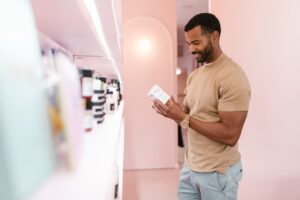
If you want to know how people shop, the best route is to simply watch them do it. Shopper observation removes the laboratory setting and tracks genuine, unedited behaviour at the physical or digital shelf.
- The Use Case: Understanding in-store navigation, shelf-standout, and packaging effectiveness.
- Why it is a better route: By observing real people in real environments, using advanced techniques like eye-tracking or conducting contextual in-store interviews right at the fixture, you capture the split-second hesitations, the visual “scan and skip” moments, and the physical friction points that a participant could never accurately articulate in a meeting room.
2. Digital Consumer Panels & Mobile Ethnography
Instead of asking people to remember a situation from days ago, modern research captures it in the moment. Platforms like our proprietary Spark Moments agile research tool allows researchers to step directly into the homes and daily lives of consumers via their smartphones, blending mobile ethnography with the scale of digital consumer panels.
- The Use Case: Understanding product usage occasions, at-home consumption habits, and the immediate emotional context of a purchase.
- Why it is a better route: Capturing video or photo diaries immediately as a product is used eliminates memory bias. It provides incredibly rich consumer insights without the skewed social dynamics of a traditional group discussion.
3. Implicit Association Testing (Biometrics & Neuroscience)
Since consumers cannot always put their emotional drivers into words, we can now use technology to measure those feelings directly. Implicit testing measures subconscious associations and split-second reactions to stimuli, such as a new logo, pack design, or ad.
- The Use Case: Testing emotional resonance, brand perception, and fast, automated decision-making.
- Why it is a better route: It measures the speed and accuracy of a consumer’s underlying emotional response before their rational brain has a chance to filter, edit, or overthink the answer.
How to Choose the Right Market Research Methods
Transitioning toward these modern methodologies does not mean discarding everything you know; it means matching the right tool to the right commercial question. When planning your next FMCG market research programme, consider these guiding principles:
- Are we testing a subconscious habit? If you are testing everyday, low-involvement FMCG purchases, prioritise observational and implicit quantitative research over group discussions.
- Do we need the context of the environment? If shelf standout is the goal, you must test in a realistic environment, whether that is a physical store or a simulated digital shelf.
- Are we measuring what they say, or what they do? Always strive to anchor your most critical commercial decisions in observed actions rather than claimed intent.
To truly grow your brand, you need to understand human behaviour as it happens in the real, messy world. By adopting these modern methodologies, you can move closer to the absolute truth of consumer decision-making.
Frequently Asked Questions (FAQs)
Brands are increasingly seeking alternatives because traditional focus groups rely on “claimed behaviour.” Participants are asked to rationalise past decisions in an artificial environment, which often fails to capture the fast, subconscious, and emotional impulses that actually drive most FMCG purchases.
The best alternative depends on the objective, but real-world shopper observation, mobile ethnography, and digital consumer panels are highly effective. These methods capture consumer behaviour “in the moment” and in real environments, eliminating the memory bias and social pressure found in group settings.
Qualitative research (like mobile ethnography and in-store interviews) is best for exploring the why behind consumer actions, understanding deep emotional context and personal routines. Quantitative research (like implicit testing or large-scale observation) is best for measuring the what, validating those behaviours at scale to provide statistical commercial certainty.