
Summary: The ability to accurately measure consumer emotions is the difference between guessing what your shoppers want and knowing exactly how to drive their behaviour. At Spark Emotions, we built the Spark Emotional Wheel to translate the complex psychology of human feelings into commercial certainty. By pinpointing the exact levels of pleasure, excitement, and control a shopper experiences, we help brands adapt their messaging to shift emotional states and drive sales.
The ability to measure what shoppers actually feel, and react accordingly, is more vital to businesses today than ever before. But human emotion is messy. If you ask a consumer how a piece of packaging or a store environment makes them feel, they will rationalise their answer. They will tell you what they think you want to hear.
At Spark Emotions, we stop asking shoppers what they claim to feel, and start observing their subconscious reality.
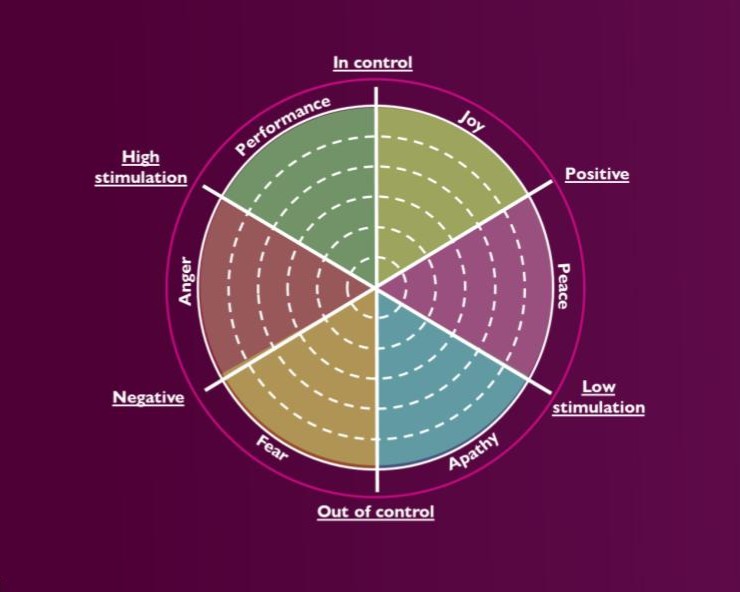
With over 20 years of experience in consumer psychology, we have developed a unique, scientifically backed model for quantifying messy human reality: The Spark Emotional Wheel. This bespoke tool allows us to pinpoint the exact emotion a person is feeling towards a brand, a physical store, or even a specific product on a shelf.
More importantly, it allows us to measure how that emotion changes over time and how it can be actively influenced by your commercial strategy.
How We Measure Emotions: The Science Behind the Wheel
Accurately measuring human emotion is a complex science, but our team of consumer psychologists exists to translate the complex into clear, actionable commercial advantage.
We work on the psychological principle that there are seven basic emotions: Happiness, Fear, Sadness, Disgust, Contempt, Surprise, and Anger. Within that framework, we can identify more than 140 specific emotional states.
Every single emotion a consumer experiences is built on three subconscious pillars:
- Pleasure: How positive or negative the experience is.
- Excitement: The level of physical or mental stimulation.
- Control: How dominant or submissive the shopper feels in that moment.
It is the unique relationship between these three pillars that determines the exact customer emotions at play. For example, the more in control a shopper feels, the less fearful they are. The more pleasure they experience, the more gleeful they become. By measuring these exact levels of Pleasure, Excitement, and Control, we map the shopper’s authentic emotional state directly onto the Spark Emotional Wheel.
The “So What?”: Translating Emotion into Action
Once we uncover the exact truth of how your consumers feel, we do not just hand you a chart. We use that data to drive commercial certainty. You have two options: tune into their current emotion to make the journey frictionless, or actively shift their position on the wheel.
Example 1: Shifting from Fear to Confidence
Imagine a shopper in the healthcare aisle. They are looking for a product to treat an uncomfortable symptom. Our research shows their overriding emotion is fear, and their feeling of control is incredibly low.
By observing this, we can optimise the packaging and point-of-sale messaging to focus on strong, reassuring product efficacy. This simple change increases their psychological control, shifting their emotional state from fearful to confident, a state where they feel empowered to make a purchase decision.

Example 2: Shifting from Cheerful to Edgy
We partnered with a clothing brand that desperately wanted its products to be perceived as “cool and edgy.” However, when we measured their consumer emotions, shoppers were actually feeling cheerful about the brand messaging.
Cheerful is a positive emotion, but it was completely misaligned with the brand’s commercial goals. We worked with the client to alter their visual cues, aiming to raise the shoppers’ excitement levels while slightly reducing their feelings of control. This successfully shifted the emotional response toward the exciting and rebellious area of the wheel, perfectly aligning with their desired brand stance.
Find more about the work we do in our case studies
Aligning with Your Consumers in the Real World
There is no “wrong” place to be on the Spark Emotional Wheel. The power lies in uncovering the truth of where your shoppers actually sit, understanding what it means, and acting upon it to build a commercial advantage.
The businesses that truly understand and align with the subconscious emotions of their consumers are the ones that will win at the shelf.
Frequently Asked Questions (FAQs)
The Spark Emotional Wheel is a proprietary behavioural science tool used to quantify consumer emotions. It maps over 140 specific emotional states within seven basic emotions, allowing brands to pinpoint exactly how a shopper feels about a product, brand, or retail environment.
We measure emotions by assessing three key psychological pillars: Pleasure, Excitement, and Control. By observing how these three factors interact when a consumer engages with a stimulus (like a store aisle or an advertisement), we can accurately plot their subconscious emotional state.
Because human shopping behaviour is driven by subconscious impulses, not deep logical thought. By quantifying the exact customer emotions a product evokes, brands can actively adjust their messaging and visual cues to shift the shopper into an emotional state that drives purchase decisions (e.g., shifting a shopper from fearful to confident).