Summary: The 2026 World Cup will not be won in the pubs; it will be won in the living room. By understanding how audiences will actually behave during the tournament, shifting heavily toward low-effort hosting and at-home viewing, brands can align their commercial strategies with real human habits.
The FIFA World Cup is a major global event that fundamentally influences how consumers spend, engage, and come together. For business leaders and FMCG brands, navigating a tournament of this scale requires looking past the football itself and understanding the specific human behaviours driving the occasion.
Our data from 732 adults across the UK and the USA has revealed exactly how the nation is feeling about the 2026 tournament. The insights show a stark contrast in national excitement, but a highly unified approach to how both markets will actually behave and consume the event.
Here is the commercial reality of World Cup 2026 consumer behaviour.
The Sentiment Divide: Excitement Versus Apprehension
If you are building global campaigns, you must account for a significant split in base engagement. Despite hosting the tournament, 40% of USA adults say they do not plan on watching the World Cup at all.
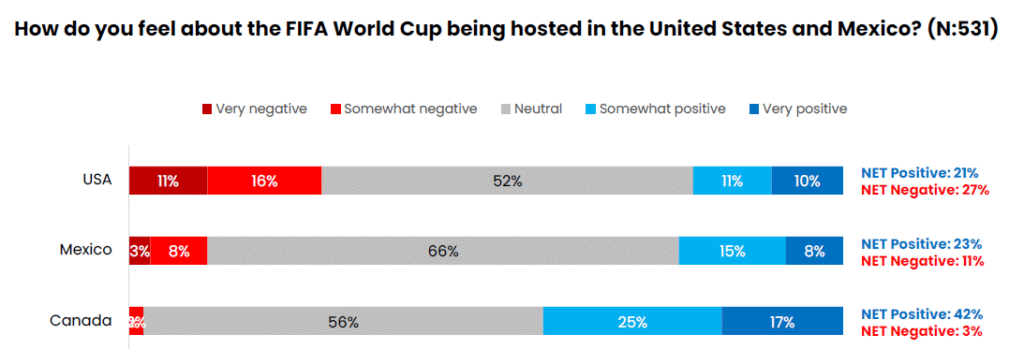
Across the Atlantic, UK adults are feeling apprehensive about the USA and Mexico hosting the tournament. The data shows a NET Negative sentiment of 27% toward the US hosting and a NET Negative sentiment of 11% toward Mexico. Interestingly, Canada fares much better, securing a NET Positive sentiment of 42% from audiences.
However, when the World Cup Final arrives, it becomes a massive shared cultural moment. Engagement spikes, and the majority of interested consumers plan to watch the final regardless of which nations actually make it to the pitch.
- 58% of UK adults and 55% of US adults will watch the final regardless of the teams playing.
- 25-44-year-olds are the most likely demographic to watch the final regardless of which nation is playing.
The At-Home Stadium is the Ultimate Commercial Opportunity
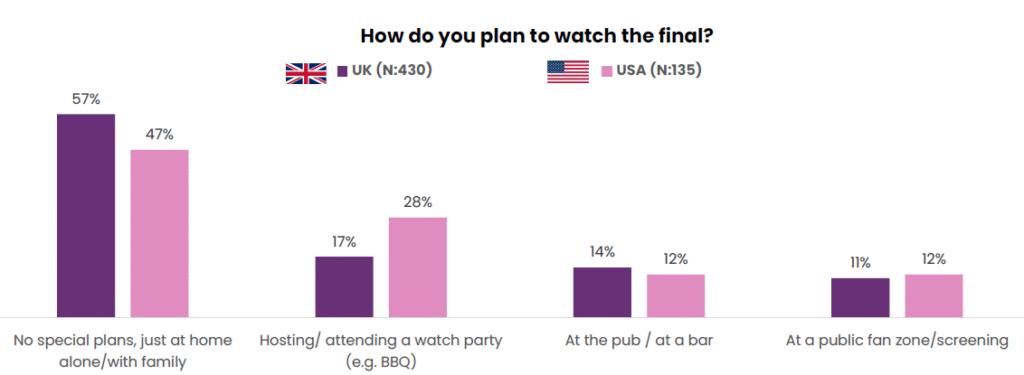
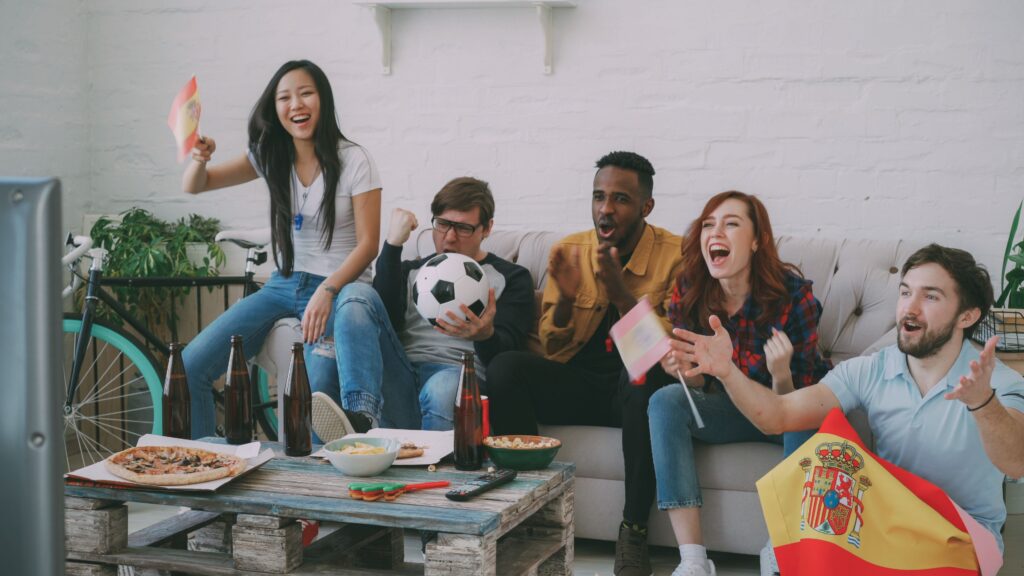
Forget the crowded pubs and public fan zones; the 2026 World Cup will be experienced in the living room. Watching at home is by far the most popular viewing method.
- 89% of UK audiences are planning to watch the majority of matches at home with family or friends.
- 79% of US audiences plan to do exactly the same.
- Viewing is primarily at home, often framed as a shared or social occasion rather than a live out-of-home event.
For brands, this means your choice architecture must cater to domestic hosting. Consumers will be looking for ways to create a tournament atmosphere at a lower price point, simulating stadium-style food in their own homes.
The Match-Day Menu: Food and Drink Dominate Behaviour
When consumers prepare for these at-home viewing parties, their wallets open almost exclusively for food and beverages. Food and drinks dominate match-day spending plans across both the UK and US.
- For general matches, 70% of UK respondents and 67% of US respondents plan to spend money on food and drinks for at home.
- Food delivery captures 46% of UK spend intent and 43% of US spend intent.
- During the final, spending intent jumps for the US, with 73% planning to buy food and drink for the home, and 42% planning to order food delivery.
- In the UK, 65% will spend on at-home food and drink for the final, with 32% opting for delivery.
The strategic takeaway is clear. Brands must own the in-home occasion by making it incredibly easy for consumers to host and enjoy the game. Whether it is convenient food and drink solutions, strategic delivery partnerships, or complete watch party bundles, the brands that reduce hosting effort while elevating the experience will secure the commercial win.
Navigating the Late-Night Friction
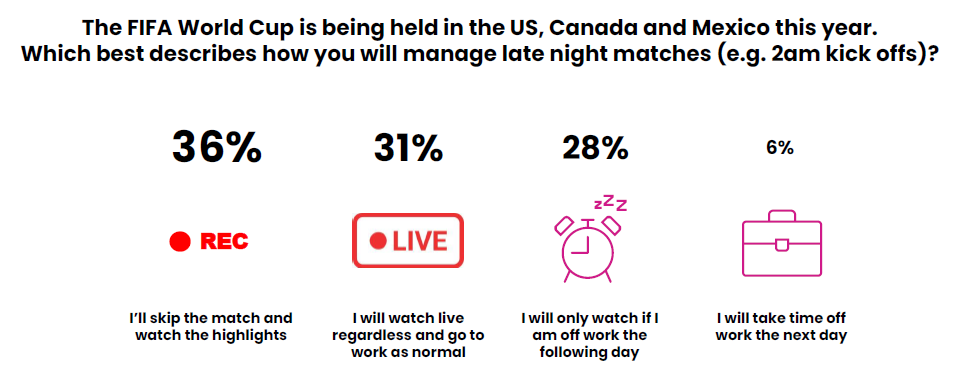
One major commercial hurdle for the 2026 tournament is the time difference. Late night kick-offs for UK consumers will deeply affect viewership behaviour and tournament engagement.
Faced with 2am kick-offs, 36% of UK respondents stated they will simply skip the live match and watch the highlights instead. Only 6% plan to take time off work the next day.
This means the traditional pre-match retail rush will shift. Brands need to align with flexible engagement. If a significant portion of your audience is watching highlights over their morning coffee or during their commute, your marketing cues and product positioning must adapt to morning and next-day consumption habits rather than just evening snacking.
Takeaways for CPG Brands
To maximise commercial returns during the 2026 World Cup, FMCG and retail leaders should pivot their strategies toward these proven behavioural drivers:
- Target the Living Room: Focus heavily on at-home viewing occasions, not just hardcore live fans.
- Remove Hosting Friction: Create easy, shareable viewing occasions by bundling food, delivery, and home entertainment offers.
- Value-Driven Atmosphere: Support low-effort, affordable ways to recreate a match-day atmosphere.
- Small Trade-Ups: Trade-ups are small and considered, focused on enhancing the moment rather than excess. Focus spend triggers around simple hosting upgrades.
Read the full report by clicking here or below