
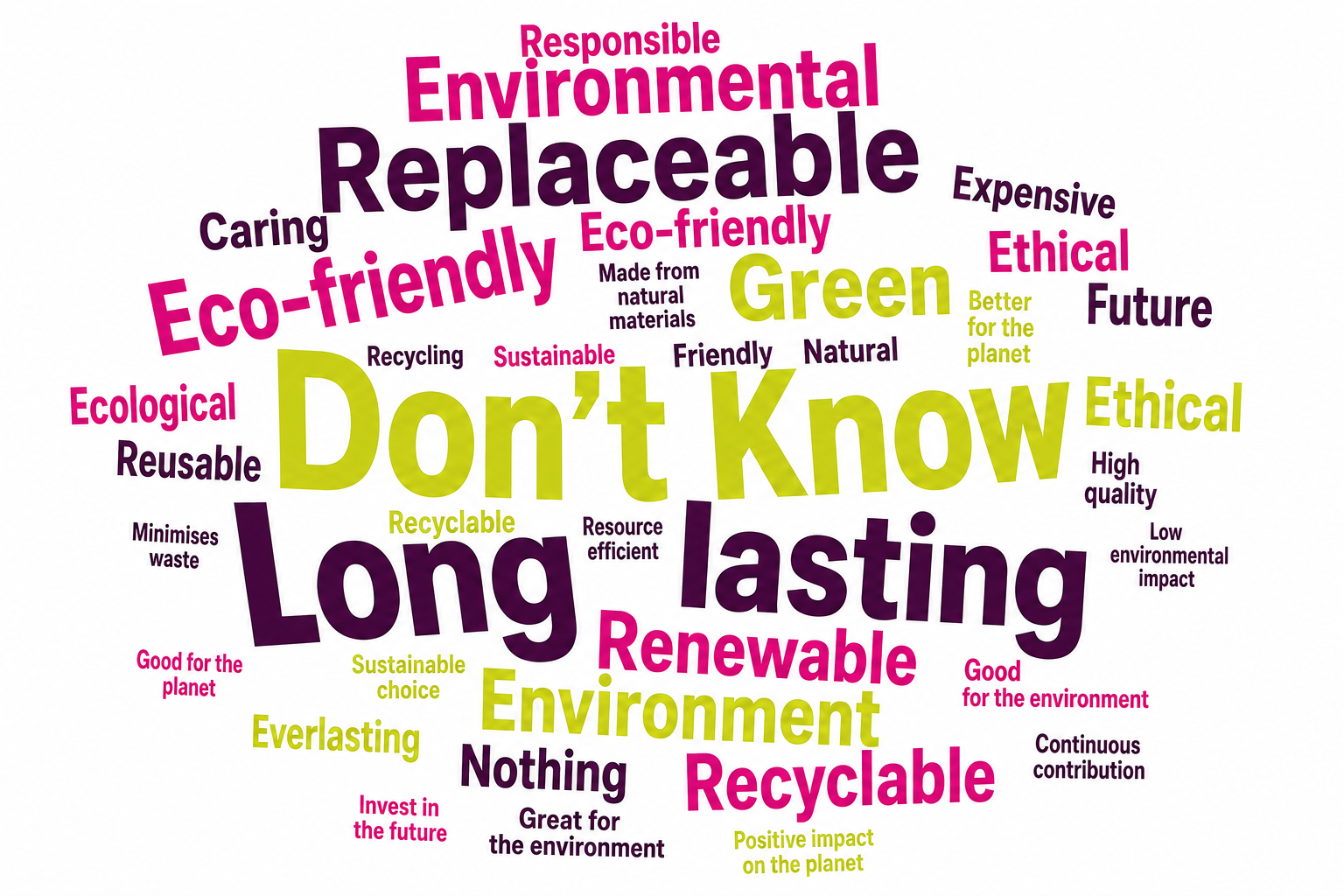
Summary: Sustainability remains an important issue for consumers, but many shoppers still struggle to define what it means. In a survey of 1,000 UK consumers, the most common response when asked to describe sustainability was “Don’t Know”, followed by “Eco-Friendly” and “Long Lasting”. The findings suggest brands should focus on communicating specific sustainability actions rather than relying on broad terminology.
What Does Sustainability Mean to Shoppers?
The impact of climate change and environmental concerns has pushed sustainability to the top of the agenda for governments, businesses and consumers alike.
As a result, sustainability messaging now appears across product packaging, advertising campaigns and retailer communications. Yet an important question remains:
Do shoppers actually understand what sustainability means?
To find out, we surveyed 1,000 consumers across the UK and asked them a simple question:
“How would you describe sustainability when shopping?”
What Did Our Sustainability Research Find?
The responses revealed a wide range of interpretations.
The most common answers included:
- Eco-friendly
- Long lasting
- Recyclable
- Environmentally friendly
- Ethical
However, the single most common response was:
“Don’t Know”
While this may appear surprising, it highlights a challenge that many brands face when communicating sustainability initiatives.
Sustainability is a broad concept that can mean different things to different people. For some shoppers, it relates to reducing waste. For others, it means ethical sourcing, recyclable packaging, renewable materials or product durability.
Why Do Consumers Struggle to Define Sustainability?
One reason is that sustainability is often communicated as an umbrella term covering multiple environmental and social issues.
Consumers generally process information more easily when it is presented in specific, tangible ways.
Rather than using broad sustainability claims, shoppers may respond better to messages that clearly explain actions such as:
- Recyclable packaging
- Renewable resources
- Reduced carbon emissions
- Locally sourced ingredients
- Reduced plastic usage
- Longer product lifespan
Specific claims are easier to understand and can help consumers make more informed purchasing decisions.

What Is the Definition of Sustainability?
According to the Cambridge Dictionary:
“Sustainability is the quality of causing little or no damage to the environment and therefore being able to continue for a long time.”
While this definition is clear, our research suggests many consumers do not naturally think about sustainability in these terms when making shopping decisions.
Instead, shoppers often interpret sustainability through practical actions they can see, understand and relate to in everyday life.
What Does This Mean for FMCG Brands?
Brands investing in sustainability initiatives face a communication challenge.
The issue may not be a lack of consumer interest. Instead, consumers may struggle to connect broad sustainability language with meaningful product benefits.
The findings suggest brands should:
- Focus on specific environmental actions
- Use clear and simple language
- Avoid relying solely on sustainability terminology
- Demonstrate tangible consumer benefits
- Test sustainability communications with real shoppers
Understanding how consumers interpret sustainability can help brands develop more effective messaging and drive stronger engagement.
Frequently Asked Questions About Sustainability
Sustainability in shopping refers to products and practices that minimise environmental impact, reduce waste and support long-term environmental responsibility.
Our survey of 1,000 UK consumers found that many shoppers struggle to clearly define sustainability, with “Don’t Know” being the most common response.
Consumers increasingly want brands to reduce environmental impact, use recyclable materials and operate responsibly. However, they often respond better to specific actions than broad sustainability claims.
Brands should focus on clear, tangible actions such as recyclable packaging, renewable resources, reduced emissions and product durability rather than relying solely on the word “sustainability”.